Events
Sign up for our mailing list to be informed about future events: join the mailing list →
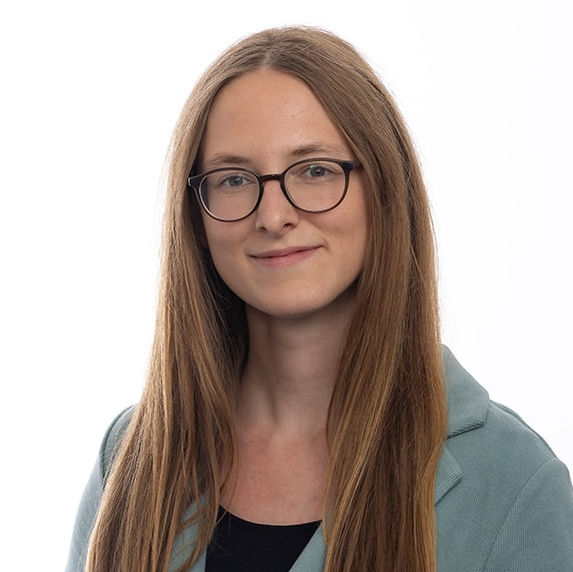
Interpretability for Improving Retrieval Models
Dr. Anja Reusch — Technion
Abstract
One way to improve retrieval systems is by understanding their internals. In my research, I use methods from mechanistic interpretability to build this understanding and study how retrieval models work. In this talk, I first present a series of analysis experiments that build an understanding of generative retrieval, that is, end-to-end language-model-based retrieval. I then show how this understanding can be used to improve generative retrieval and make it more applicable to real-world scenarios. In the end, I highlight ongoing research beyond generative retrieval.
Bio
Anja Reusch is a postdoctoral researcher in the lab of Yonatan Belinkov at the Technion. Before that, she completed her PhD in the Database Research Group at TU Dresden in Germany where she worked on retrieval models for mathematical documents. Her main area of research is Interpretability in Information Retrieval and Natural Language Processing.

LLMs Are Not Usage-Based (Yet)
Bastian Bunzeck — Bielefeld University
Abstract
The meteoric rise of language models over the last couple of years is certainly impressive, but it has provoked mixed responses from the scientists who actually study language. While (L)LMs have been largely dismissed by Generative/Chomskian linguists, usage-based communities and Construction Grammar have embraced them more openly, with many taking them as evidence for their own approaches. I will argue that while (L)LMs certainly put aspects like the importance of frequency, statistical learning and distributional properties for language learning into practice, they still lack "usage" in the sense of, inter alia, Elena Lieven or Michael Tomasello. I will present ongoing work on how language models trained on developmentally plausible data compare to findings from usage-based linguistics, how such models fail to reflect key patterns of human interaction, and how approaches like instruction-tuning can be used to enhance models' capacity to model realistic use.
Bio
Bastian Bunzeck is a Doctoral Researcher at Bielefeld University with Sina Zarrieß, where he is working on his dissertation project about developmental plausibility in neural language models. He studied English Linguistics and Computer Science at the Universities of Jena (Germany) and Leuven (Belgium). His current research is focused on child-directed speech and the nature of linguistic input data, what is learnable from different types of input, and the role of interaction in human and artificial language learning.

The Reconstruction will not be Supervised: Towards Neural Implementations of the Comparative Method
Prof. David R. Mortensen — Carnegie Mellon University
Abstract
In the 19th century, European linguists discovered that it was possible to reconstruct the pronunciation of earlier languages with no surviving written records in a reproducible fashion by comparing their descendants (the Comparative Method). Starting in the 1960s, multiple attempts have been made to implement the Comparative Method computationally to assist linguists in reconstructing ancestors for the hundreds of language families existing today. However, these efforts have never achieved the accuracy and insight of a first-year student of historical linguistics. In particular, these models have relied on direct or indirect supervision, in contrast to linguistics students, who are able to operate without supervision. David presents a new way to understand the Comparative Method in terms of information theory, and shows how this framework can be used to reduce or eliminate the supervision necessary to reconstruct ancestral pronunciations (protoforms) and changes in pronunciation (sound laws). Finally, he presents results from an agent-based approach through which the entire Comparative Method can be automated without any direct supervision.
Bio
David R. Mortensen is an Associate Research Professor in the Language Technologies Institute at Carnegie Mellon University. He received his PhD in Linguistics from the University of California at Berkeley and held a position as an Assistant Professor of Linguistics at the University of Pittsburgh before transitioning to CMU, computational linguistics, and NLP. His work sits at the intersection of natural language processing, speech processing, phonology, morphology, language change, and inductive reasoning. His unifying motto, "language use is language change," underscores a commitment to approaching language as a dynamic system, varying across space, time, social context, and ability. He received a Best Paper Award at ACL 2024 for work that brings together multiple strands of this agenda.

Language as a (Linguistic) Network
Dr. Nina Böbel — Heinrich Heine University Düsseldorf
Abstract
Construction Grammar (CxG) is one of the major approaches within Cognitive Linguistics. Analyzing linguistic units as so-called constructions (pairs of form and meaning with different levels of schematicity, complexity and idiomaticity) has numerous advantages: the approach allows for the analysis of a wide variety of units (individual words, multi-word units, and even entire sentence structures can all be considered constructions), is highly adaptable with other approaches, assumes a continuum between grammar and lexicon and, accordingly, accesses the area of linguistic utterances that cannot be captured by either lexicon or grammar alone. This talk introduces the key assumptions of Construction Grammar and explains how a group of different constructions form a so-called Constructicon (a lexicon of constructions) — basically a network of constructions. The advantages and challenges of working with linguistic networks are addressed, and it is shown that the representation of a linguistic network varies depending on the parameters assigned to the relations and on the research question. Case studies illustrating the network approach in the domains of Intensification, Conditionality, and Superlatives will show different usage scenarios.
Bio
Nina Böbel is a Postdoctoral Researcher at Heinrich Heine University Düsseldorf. She is responsible for the Constructicon in the German FrameNet-Constructicon project. She earned her PhD in 2024 with a dissertation on the network of conditional clause constructions from Middle High German to today. Her research focuses on Constructicography, Construction Grammar, Historical Linguistics, Variational Linguistics, and Typology.
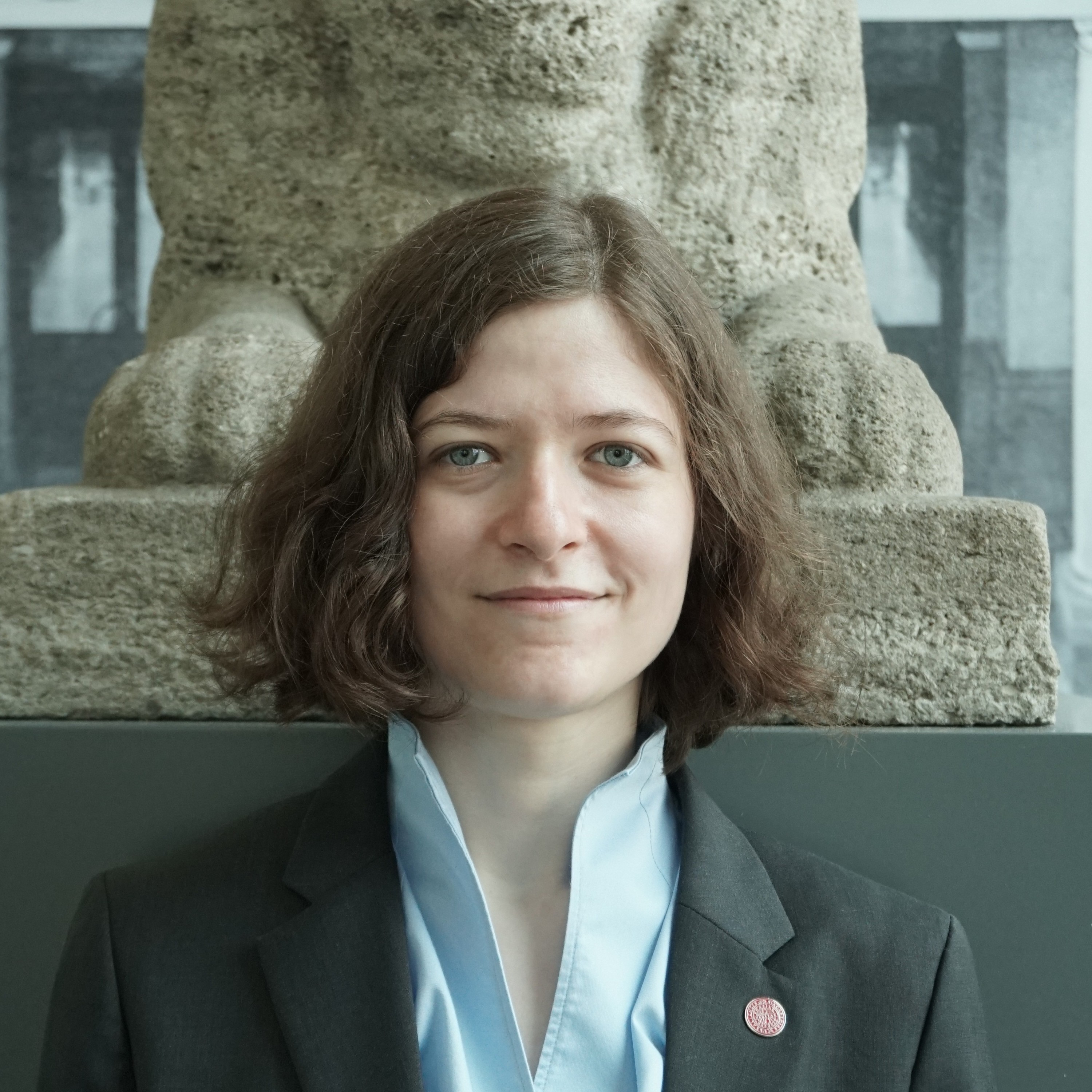
Hybrid Human-LLM Corpus Construction and LLM Evaluation for the Caused-Motion Construction
Jun.-Prof. Dr. Leonie Weißweiler — Digital Humanities Open Garden 2026
About the event
The Digital Humanities Open Garden is an open event hosted by the FDHL, bringing together DH-interested researchers, students, and practitioners from Leipzig and the wider region. The 2026 edition takes place at the garden of the Sächsische Akademie der Wissenschaften, Karl-Tauchnitz-Str. 1, followed by a BBQ from 17:00.

Implicit Misogyny and Classism in NLP
Dr. Arianna Muti — Bocconi University, Milan
Abstract
Implicit misogyny and classism are difficult for NLP systems because they are often conveyed indirectly, through presuppositions, stereotypes, and unstated assumptions rather than explicit hateful expressions. Arianna presents work on analysing these implicit forms of harm in social media — framing misogyny detection as an argumentative reasoning task, and introducing ACID, a resource for studying how lower-SES people are perceived across cultures.
Bio
Arianna Muti is a Postdoctoral Research Fellow at Bocconi University, part of the MilaNLP group. Her research focuses on NLP with particular attention to detection and explanation of implicit misogyny and classism in social media. She is currently working on PERSONAE, developing identity-aware language technologies.

What Is Discourse, and What Do LLMs Know About It?
Prof. Yang Janet Liu — University of Pittsburgh
Abstract
As LLM-generated output becomes increasingly fluent, evaluating what they know and how reliably they generalise has become critical. At the discourse level, meaning is conveyed beyond single sentences, shaped by linguistic conventions, communicative goals, and variation in human interpretation. Janet presents work examining LLMs' grasp of discourse coherence, how breaking down model reasoning into discourse units can account for human label variation, and how incorporating discourse relations can improve faithfulness evaluation in long-form summarisation.
Bio
Yang Janet Liu is an Assistant Professor in the Department of Linguistics at the University of Pittsburgh, with a secondary appointment in the Intelligent Systems Program. Her research focuses on computational approaches to discourse-level phenomena, LLM evaluation, and how pragmatic variation shapes language use and model behaviour. She earned her PhD from Georgetown University and was previously a postdoctoral researcher in the MaiNLP Lab at LMU Munich.